Buy visitinghomecareservices.eu ?
We are moving the project
visitinghomecareservices.eu .
Are you interested in purchasing the domain
visitinghomecareservices.eu ?
domain@kv-gmbh.de · 0541-91531010
Buy visitinghomecareservices.eu ?
Are the subjunctive I and the subjunctive II present in all tenses?
No, the subjunctive I and subjunctive II are not present in all tenses. The subjunctive I is only present in the present tense, while the subjunctive II is present in the past tense. The subjunctive I is used to express wishes, suggestions, or hypothetical situations in the present, while the subjunctive II is used to express wishes, suggestions, or hypothetical situations in the past. Each tense has its own specific form of the subjunctive mood. **
Indicative or subjunctive in French?
The choice between indicative and subjunctive in French depends on the context and the verb used. The indicative mood is used for statements of fact or certainty, while the subjunctive mood is used for expressing doubt, uncertainty, or subjective feelings. Verbs of emotion, doubt, desire, and necessity often trigger the use of the subjunctive mood. It is important to pay attention to the specific verb and the context in order to determine whether to use the indicative or subjunctive in French. **


Similar search terms for Subjunctive
Top-Angebote
Products related to Subjunctive:
-
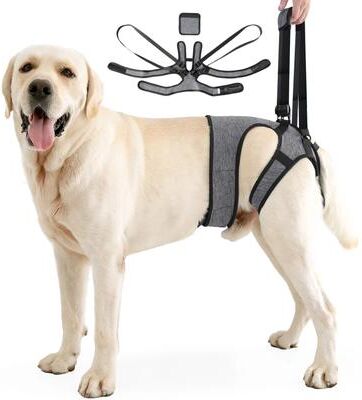
Inspire Select Dog Lift Support Harness Adjustable Rear Leg Support Sling For Mobility Assistance gray lHelp your furry companion move with greater comfort and confidence using this supportive dog lift harness. Designed to provide reliable assistance for pets with mobility challenges, this dog support sling helps reduce strain while walking, climbing...157,95 $*Shipping: 0,00 $Secure redirect to the provider
-
Inspire Select Dog Lift Support Harness Adjustable Rear Leg Support Sling For Mobility Assistance gray sHelp your furry companion move with greater comfort and confidence using this supportive dog lift harness. Designed to provide reliable assistance for pets with mobility challenges, this dog support sling helps reduce strain while walking, climbing...138,99 $*Shipping: 0,00 $Secure redirect to the provider
-
Inspire Select Dog Lift Support Harness Adjustable Rear Leg Support Sling For Mobility Assistance blue lHelp your furry companion move with greater comfort and confidence using this supportive dog lift harness. Designed to provide reliable assistance for pets with mobility challenges, this dog support sling helps reduce strain while walking, climbing...157,95 $*Shipping: 0,00 $Secure redirect to the provider
-
Inspire Select Dog Lift Support Harness Adjustable Rear Leg Support Sling For Mobility Assistance gray mHelp your furry companion move with greater comfort and confidence using this supportive dog lift harness. Designed to provide reliable assistance for pets with mobility challenges, this dog support sling helps reduce strain while walking, climbing...148,95 $*Shipping: 0,00 $Secure redirect to the provider


-
How are Latin subjunctive subordinate clauses still translated with the subjunctive?
Latin subjunctive subordinate clauses are still translated with the subjunctive in English to convey the same sense of uncertainty, possibility, or doubt. In English, the subjunctive mood is used to express hypothetical or unreal situations, wishes, recommendations, or demands. Therefore, when translating Latin subjunctive subordinate clauses, the English subjunctive is used to maintain the same mood and meaning of the original Latin sentence. **
-
Perhaps, subjunctive or indicative?
The choice between subjunctive or indicative depends on the context of the sentence. The subjunctive mood is used to express hypothetical or uncertain situations, wishes, recommendations, or doubts. On the other hand, the indicative mood is used for statements of fact or certainty. Therefore, if the sentence is expressing a possibility, doubt, or desire, the subjunctive mood would be more appropriate. **
-
Maybe subjunctive or indicative?
The choice between subjunctive or indicative depends on the context of the sentence. The subjunctive mood is used to express doubt, uncertainty, desire, or hypothetical situations, while the indicative mood is used for statements of fact or certainty. To determine whether to use subjunctive or indicative, consider the verb's relationship to reality and whether it is expressing a fact or a possibility. **
-
Conditional, subjunctive or indicative?
The choice between conditional, subjunctive, or indicative mood depends on the context of the sentence. The conditional mood is used to express a hypothetical situation or a condition that is dependent on something else happening. The subjunctive mood is used to express wishes, recommendations, or possibilities. The indicative mood is used to state facts or ask questions. **

Subjunctive or indicative in French grammar?
In French grammar, the use of subjunctive or indicative depends on the context and the verb tense being used. The indicative mood is used to express facts, statements, and certainty, while the subjunctive mood is used to express doubt, uncertainty, wishes, emotions, or hypothetical situations. Verbs that trigger the subjunctive mood often express desires, doubts, or uncertainty, and require the use of the subjunctive mood in the dependent clause. It is important to pay attention to the verb conjugation and the context in order to determine whether to use the subjunctive or indicative mood in French. **
What are facts in the subjunctive?
Facts in the subjunctive are statements that express a hypothetical or unreal situation. They are used to talk about things that are not necessarily true or have not yet happened. In English, the subjunctive is often indicated by the use of the base form of the verb (e.g. "I wish I were there" instead of "I wish I was there"). Subjunctive facts are often used to express wishes, suggestions, or hypothetical scenarios. **
Top-Angebote
Products related to Subjunctive:
-
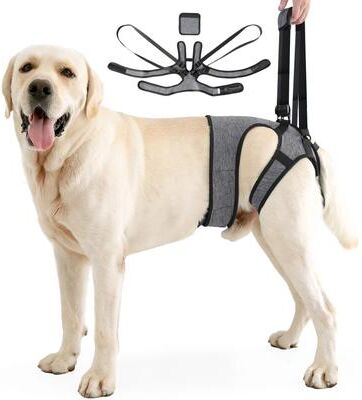
Inspire Select Dog Lift Support Harness Adjustable Rear Leg Support Sling For Mobility Assistance blue xlHelp your furry companion move with greater comfort and confidence using this supportive dog lift harness. Designed to provide reliable assistance for pets with mobility challenges, this dog support sling helps reduce strain while walking, climbing...90,98 $*Shipping: 0,00 $Secure redirect to the provider
-
Inspire Picks Adjustable Dog Lift Harness For Back Leg Support & Walking Assistance blue xlHelp your dog move more comfortably with this supportive dog lift harness designed to assist pets with weak back legs, mobility issues, or postsurgery recovery. Featuring a secure adjustable sling design, this walking support harness helps owners...83,44 $*Shipping: 0,00 $Secure redirect to the provider
-
Inspire Select Dog Lift Support Harness Adjustable Rear Leg Support Sling For Mobility Assistance gray lHelp your furry companion move with greater comfort and confidence using this supportive dog lift harness. Designed to provide reliable assistance for pets with mobility challenges, this dog support sling helps reduce strain while walking, climbing...157,95 $*Shipping: 0,00 $Secure redirect to the provider
-
Inspire Select Dog Lift Support Harness Adjustable Rear Leg Support Sling For Mobility Assistance gray sHelp your furry companion move with greater comfort and confidence using this supportive dog lift harness. Designed to provide reliable assistance for pets with mobility challenges, this dog support sling helps reduce strain while walking, climbing...138,99 $*Shipping: 0,00 $Secure redirect to the provider
-
Are the subjunctive I and the subjunctive II present in all tenses?
No, the subjunctive I and subjunctive II are not present in all tenses. The subjunctive I is only present in the present tense, while the subjunctive II is present in the past tense. The subjunctive I is used to express wishes, suggestions, or hypothetical situations in the present, while the subjunctive II is used to express wishes, suggestions, or hypothetical situations in the past. Each tense has its own specific form of the subjunctive mood. **
-
Indicative or subjunctive in French?
The choice between indicative and subjunctive in French depends on the context and the verb used. The indicative mood is used for statements of fact or certainty, while the subjunctive mood is used for expressing doubt, uncertainty, or subjective feelings. Verbs of emotion, doubt, desire, and necessity often trigger the use of the subjunctive mood. It is important to pay attention to the specific verb and the context in order to determine whether to use the indicative or subjunctive in French. **
-
How are Latin subjunctive subordinate clauses still translated with the subjunctive?
Latin subjunctive subordinate clauses are still translated with the subjunctive in English to convey the same sense of uncertainty, possibility, or doubt. In English, the subjunctive mood is used to express hypothetical or unreal situations, wishes, recommendations, or demands. Therefore, when translating Latin subjunctive subordinate clauses, the English subjunctive is used to maintain the same mood and meaning of the original Latin sentence. **
-
Perhaps, subjunctive or indicative?
The choice between subjunctive or indicative depends on the context of the sentence. The subjunctive mood is used to express hypothetical or uncertain situations, wishes, recommendations, or doubts. On the other hand, the indicative mood is used for statements of fact or certainty. Therefore, if the sentence is expressing a possibility, doubt, or desire, the subjunctive mood would be more appropriate. **
Similar search terms for Subjunctive
-
Inspire Select Dog Lift Support Harness Adjustable Rear Leg Support Sling For Mobility Assistance blue lHelp your furry companion move with greater comfort and confidence using this supportive dog lift harness. Designed to provide reliable assistance for pets with mobility challenges, this dog support sling helps reduce strain while walking, climbing...157,95 $*Shipping: 0,00 $Secure redirect to the provider
-
Inspire Select Dog Lift Support Harness Adjustable Rear Leg Support Sling For Mobility Assistance gray mHelp your furry companion move with greater comfort and confidence using this supportive dog lift harness. Designed to provide reliable assistance for pets with mobility challenges, this dog support sling helps reduce strain while walking, climbing...148,95 $*Shipping: 0,00 $Secure redirect to the provider
-
Inspire Select Dog Lift Support Harness Adjustable Rear Leg Support Sling For Mobility Assistance gray xlHelp your furry companion move with greater comfort and confidence using this supportive dog lift harness. Designed to provide reliable assistance for pets with mobility challenges, this dog support sling helps reduce strain while walking, climbing...90,98 $*Shipping: 0,00 $Secure redirect to the provider
-
Inspire Select Dog Lift Support Harness Adjustable Rear Leg Support Sling For Mobility Assistance blue sHelp your furry companion move with greater comfort and confidence using this supportive dog lift harness. Designed to provide reliable assistance for pets with mobility challenges, this dog support sling helps reduce strain while walking, climbing...138,99 $*Shipping: 0,00 $Secure redirect to the provider
-
Maybe subjunctive or indicative?
The choice between subjunctive or indicative depends on the context of the sentence. The subjunctive mood is used to express doubt, uncertainty, desire, or hypothetical situations, while the indicative mood is used for statements of fact or certainty. To determine whether to use subjunctive or indicative, consider the verb's relationship to reality and whether it is expressing a fact or a possibility. **
-
Conditional, subjunctive or indicative?
The choice between conditional, subjunctive, or indicative mood depends on the context of the sentence. The conditional mood is used to express a hypothetical situation or a condition that is dependent on something else happening. The subjunctive mood is used to express wishes, recommendations, or possibilities. The indicative mood is used to state facts or ask questions. **
-
Subjunctive or indicative in French grammar?
In French grammar, the use of subjunctive or indicative depends on the context and the verb tense being used. The indicative mood is used to express facts, statements, and certainty, while the subjunctive mood is used to express doubt, uncertainty, wishes, emotions, or hypothetical situations. Verbs that trigger the subjunctive mood often express desires, doubts, or uncertainty, and require the use of the subjunctive mood in the dependent clause. It is important to pay attention to the verb conjugation and the context in order to determine whether to use the subjunctive or indicative mood in French. **
-
What are facts in the subjunctive?
Facts in the subjunctive are statements that express a hypothetical or unreal situation. They are used to talk about things that are not necessarily true or have not yet happened. In English, the subjunctive is often indicated by the use of the base form of the verb (e.g. "I wish I were there" instead of "I wish I was there"). Subjunctive facts are often used to express wishes, suggestions, or hypothetical scenarios. **
* All prices are inclusive of VAT and, if applicable, plus shipping costs. The offer information is based on the details provided by the respective shop and is updated through automated processes. Real-time updates do not occur, so deviations can occur in individual cases. ** Note: Parts of this content were created by AI.