Buy visitinghomecareservices.eu ?
We are moving the project
visitinghomecareservices.eu .
Are you interested in purchasing the domain
visitinghomecareservices.eu ?
domain@kv-gmbh.de · 0541-91531010
Buy visitinghomecareservices.eu ?
How do you conjugate in Hebrew?
In Hebrew, verbs are conjugated based on the subject of the sentence and the tense of the action. There are different conjugation patterns for each tense (past, present, future) and for each subject (I, you, he/she/it, we, you all, they). The verb root remains the same, but the conjugation changes to match the subject and tense. Additionally, Hebrew verbs also change based on gender and number of the subject. Learning the conjugation patterns and practicing with different verbs is essential for mastering Hebrew verb conjugation. **
How do you conjugate in French?
In French, verbs are conjugated to match the subject of the sentence, including the person (I, you, he/she, we, they) and the tense (present, past, future, etc.). To conjugate a regular verb in the present tense, you remove the infinitive ending (-er, -ir, -re) and add the appropriate ending for the subject (je, tu, il/elle, nous, vous, ils/elles). For example, for the verb "parler" (to speak), you would conjugate it as "je parle" (I speak), "tu parles" (you speak), "il/elle parle" (he/she speaks), "nous parlons" (we speak), "vous parlez" (you speak), "ils/elles parlent" (they speak). Irregular verbs have their own unique conjugation patterns that need to be memorized. **

Similar search terms for Conjugate
Top-Angebote
Products related to Conjugate:
-
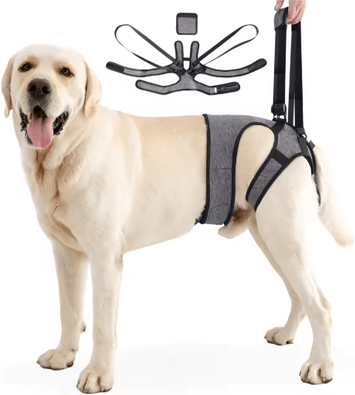
Inspire Select Dog Lift Support Harness Adjustable Rear Leg Support Sling For Mobility Assistance blue lHelp your furry companion move with greater comfort and confidence using this supportive dog lift harness. Designed to provide reliable assistance for pets with mobility challenges, this dog support sling helps reduce strain while walking, climbing...157,95 $*Shipping: 0,00 $Secure redirect to the provider
-
Inspire Select Dog Lift Support Harness Adjustable Rear Leg Support Sling For Mobility Assistance gray sHelp your furry companion move with greater comfort and confidence using this supportive dog lift harness. Designed to provide reliable assistance for pets with mobility challenges, this dog support sling helps reduce strain while walking, climbing...138,99 $*Shipping: 0,00 $Secure redirect to the provider
-
Inspire Select Dog Lift Support Harness Adjustable Rear Leg Support Sling For Mobility Assistance gray lHelp your furry companion move with greater comfort and confidence using this supportive dog lift harness. Designed to provide reliable assistance for pets with mobility challenges, this dog support sling helps reduce strain while walking, climbing...157,95 $*Shipping: 0,00 $Secure redirect to the provider
-
Inspire Select Dog Lift Support Harness Adjustable Rear Leg Support Sling For Mobility Assistance gray mHelp your furry companion move with greater comfort and confidence using this supportive dog lift harness. Designed to provide reliable assistance for pets with mobility challenges, this dog support sling helps reduce strain while walking, climbing...148,95 $*Shipping: 0,00 $Secure redirect to the provider



-
When do you conjugate "avoir"?
The verb "avoir" is conjugated when talking about possession or to form compound tenses such as the passé composé. In these cases, "avoir" is conjugated according to the subject of the sentence. For example, "J'ai un chat" (I have a cat) or "Nous avons mangé" (We have eaten). **
-
How do you conjugate falloir?
The verb "falloir" is an impersonal verb, meaning it is only used in the third person singular. It is conjugated as "il faut" in the present tense, "il fallait" in the imperfect tense, and "il faudra" in the future tense. There is no need to conjugate it for different subjects, as it always remains in the third person singular form. **
-
How do you conjugate "perire" in Latin?
The verb "perire" in Latin is conjugated as follows in the present tense: - I perish: pereo - You perish: peris - He/she/it perishes: perit - We perish: perimus - You (plural) perish: peritis - They perish: pereunt **
-
How do you conjugate "pasarlo" in Spanish?
To conjugate "pasarlo" in Spanish, you would use the verb "pasar" in the infinitive form and add the appropriate pronoun before it. For example, "yo lo paso" (I pass it), "tú lo pasas" (you pass it), "él/ella lo pasa" (he/she passes it), "nosotros/nosotras lo pasamos" (we pass it), "vosotros/vosotras lo pasáis" (you all pass it), "ellos/ellas lo pasan" (they pass it). **

How do you conjugate "pleuvoir" in French?
The verb "pleuvoir" is an irregular verb in French, so its conjugation does not follow the regular patterns. In the present tense, it is conjugated as follows: "il pleut" (it is raining). In the past tense, it is conjugated as "il a plu" (it rained). In the future tense, it is conjugated as "il pleuvra" (it will rain). **
How do you conjugate verbs in French?
In French, verbs are conjugated based on the subject pronoun (je, tu, il/elle/on, nous, vous, ils/elles) and the tense of the verb (present, past, future, etc.). To conjugate a regular verb in the present tense, you typically remove the infinitive ending (-er, -ir, -re) and add the appropriate ending for each subject pronoun. For example, for the verb "parler" (to speak), you would conjugate it as "je parle, tu parles, il/elle/on parle, nous parlons, vous parlez, ils/elles parlent." Irregular verbs have unique conjugation patterns that must be memorized. **
Top-Angebote
Products related to Conjugate:
-
Inspire Select Dog Lift Support Harness Adjustable Rear Leg Support Sling For Mobility Assistance blue sHelp your furry companion move with greater comfort and confidence using this supportive dog lift harness. Designed to provide reliable assistance for pets with mobility challenges, this dog support sling helps reduce strain while walking, climbing...138,99 $*Shipping: 0,00 $Secure redirect to the provider
-
Inspire Picks Adjustable Dog Lift Harness For Back Leg Support & Walking Assistance gray lHelp your dog move more comfortably with this supportive dog lift harness designed to assist pets with weak back legs, mobility issues, or postsurgery recovery. Featuring a secure adjustable sling design, this walking support harness helps owners...80,20 $*Shipping: 0,00 $Secure redirect to the provider
-
Inspire Select Dog Lift Support Harness Adjustable Rear Leg Support Sling For Mobility Assistance blue lHelp your furry companion move with greater comfort and confidence using this supportive dog lift harness. Designed to provide reliable assistance for pets with mobility challenges, this dog support sling helps reduce strain while walking, climbing...157,95 $*Shipping: 0,00 $Secure redirect to the provider
-
Inspire Select Dog Lift Support Harness Adjustable Rear Leg Support Sling For Mobility Assistance gray sHelp your furry companion move with greater comfort and confidence using this supportive dog lift harness. Designed to provide reliable assistance for pets with mobility challenges, this dog support sling helps reduce strain while walking, climbing...138,99 $*Shipping: 0,00 $Secure redirect to the provider
-
How do you conjugate in Hebrew?
In Hebrew, verbs are conjugated based on the subject of the sentence and the tense of the action. There are different conjugation patterns for each tense (past, present, future) and for each subject (I, you, he/she/it, we, you all, they). The verb root remains the same, but the conjugation changes to match the subject and tense. Additionally, Hebrew verbs also change based on gender and number of the subject. Learning the conjugation patterns and practicing with different verbs is essential for mastering Hebrew verb conjugation. **
-
How do you conjugate in French?
In French, verbs are conjugated to match the subject of the sentence, including the person (I, you, he/she, we, they) and the tense (present, past, future, etc.). To conjugate a regular verb in the present tense, you remove the infinitive ending (-er, -ir, -re) and add the appropriate ending for the subject (je, tu, il/elle, nous, vous, ils/elles). For example, for the verb "parler" (to speak), you would conjugate it as "je parle" (I speak), "tu parles" (you speak), "il/elle parle" (he/she speaks), "nous parlons" (we speak), "vous parlez" (you speak), "ils/elles parlent" (they speak). Irregular verbs have their own unique conjugation patterns that need to be memorized. **
-
When do you conjugate "avoir"?
The verb "avoir" is conjugated when talking about possession or to form compound tenses such as the passé composé. In these cases, "avoir" is conjugated according to the subject of the sentence. For example, "J'ai un chat" (I have a cat) or "Nous avons mangé" (We have eaten). **
-
How do you conjugate falloir?
The verb "falloir" is an impersonal verb, meaning it is only used in the third person singular. It is conjugated as "il faut" in the present tense, "il fallait" in the imperfect tense, and "il faudra" in the future tense. There is no need to conjugate it for different subjects, as it always remains in the third person singular form. **
Similar search terms for Conjugate
-
Inspire Select Dog Lift Support Harness Adjustable Rear Leg Support Sling For Mobility Assistance gray lHelp your furry companion move with greater comfort and confidence using this supportive dog lift harness. Designed to provide reliable assistance for pets with mobility challenges, this dog support sling helps reduce strain while walking, climbing...157,95 $*Shipping: 0,00 $Secure redirect to the provider
-
Inspire Select Dog Lift Support Harness Adjustable Rear Leg Support Sling For Mobility Assistance gray mHelp your furry companion move with greater comfort and confidence using this supportive dog lift harness. Designed to provide reliable assistance for pets with mobility challenges, this dog support sling helps reduce strain while walking, climbing...148,95 $*Shipping: 0,00 $Secure redirect to the provider
-
Inspire Select Dog Lift Support Harness Adjustable Rear Leg Support Sling For Mobility Assistance blue xlHelp your furry companion move with greater comfort and confidence using this supportive dog lift harness. Designed to provide reliable assistance for pets with mobility challenges, this dog support sling helps reduce strain while walking, climbing...90,98 $*Shipping: 0,00 $Secure redirect to the provider
-
Inspire Select Dog Lift Support Harness Adjustable Rear Leg Support Sling For Mobility Assistance gray xlHelp your furry companion move with greater comfort and confidence using this supportive dog lift harness. Designed to provide reliable assistance for pets with mobility challenges, this dog support sling helps reduce strain while walking, climbing...90,98 $*Shipping: 0,00 $Secure redirect to the provider
-
How do you conjugate "perire" in Latin?
The verb "perire" in Latin is conjugated as follows in the present tense: - I perish: pereo - You perish: peris - He/she/it perishes: perit - We perish: perimus - You (plural) perish: peritis - They perish: pereunt **
-
How do you conjugate "pasarlo" in Spanish?
To conjugate "pasarlo" in Spanish, you would use the verb "pasar" in the infinitive form and add the appropriate pronoun before it. For example, "yo lo paso" (I pass it), "tú lo pasas" (you pass it), "él/ella lo pasa" (he/she passes it), "nosotros/nosotras lo pasamos" (we pass it), "vosotros/vosotras lo pasáis" (you all pass it), "ellos/ellas lo pasan" (they pass it). **
-
How do you conjugate "pleuvoir" in French?
The verb "pleuvoir" is an irregular verb in French, so its conjugation does not follow the regular patterns. In the present tense, it is conjugated as follows: "il pleut" (it is raining). In the past tense, it is conjugated as "il a plu" (it rained). In the future tense, it is conjugated as "il pleuvra" (it will rain). **
-
How do you conjugate verbs in French?
In French, verbs are conjugated based on the subject pronoun (je, tu, il/elle/on, nous, vous, ils/elles) and the tense of the verb (present, past, future, etc.). To conjugate a regular verb in the present tense, you typically remove the infinitive ending (-er, -ir, -re) and add the appropriate ending for each subject pronoun. For example, for the verb "parler" (to speak), you would conjugate it as "je parle, tu parles, il/elle/on parle, nous parlons, vous parlez, ils/elles parlent." Irregular verbs have unique conjugation patterns that must be memorized. **
* All prices are inclusive of VAT and, if applicable, plus shipping costs. The offer information is based on the details provided by the respective shop and is updated through automated processes. Real-time updates do not occur, so deviations can occur in individual cases. ** Note: Parts of this content were created by AI.